Thirty Games an Hour: The Quiet Revolution Changing How Aussies Actually Gamble
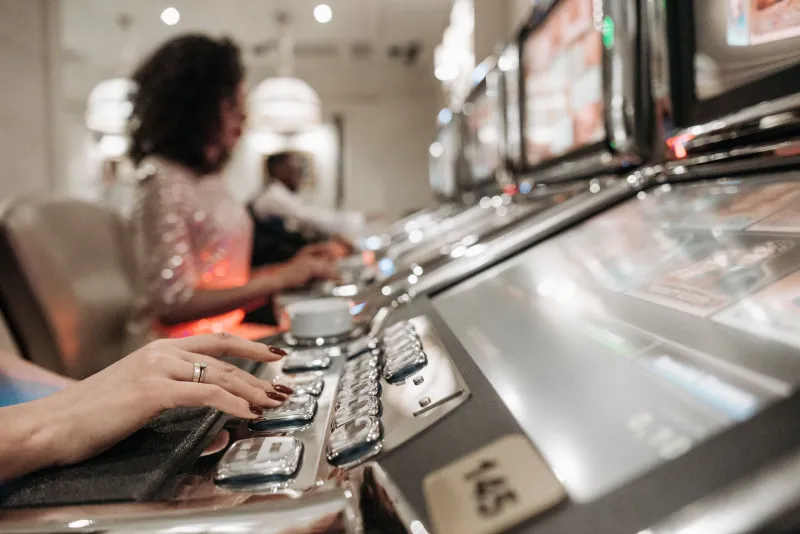
Cast your mind back to a Friday night at your local RSL. You'd grab a drink, find a machine in the corner, and settle in. Between the slow mechanical spins, the wait for a seat, and the general rhythm of the venue, you'd probably cycle through maybe eight to twelve games in a sitting. It felt leisurely because it was leisurely.
Now picture the same punter in 2025, phone in hand during a commute on the Sydney trains or parked on the couch after dinner. On a modern instant-play platform, that same person can realistically push through thirty, forty, even fifty individual game rounds in sixty minutes — without ever standing up, carrying cash, or waiting for a machine to free up.
That's not just a convenience upgrade. That's a fundamental rewiring of how Australians gamble.
The Mechanics Behind the Speed
Instant-play casinos didn't set out to make gambling faster on purpose — at least, not in any sinister blueprint kind of way. The speed emerged naturally from removing friction. Every feature designed to make the experience smoother also happened to shave seconds off each game cycle.
Consider automatic game resets. In a physical venue, after a spin or a hand of cards, there's a natural pause. The machine resets visually, you think about your next bet, maybe you sip your drink. Online, the reset is near-instantaneous. The next round is ready before you've fully processed the last one.
Then there's one-click betting. Rather than physically inserting coins or pressing multiple buttons to confirm your stake, a single tap on a mobile screen triggers the next round. Studies in behavioural economics have consistently shown that reducing the number of actions required to complete a behaviour dramatically increases the frequency of that behaviour. Casinos aren't exploiting some dark secret here — they're just following the same logic that made streaming services add autoplay.
Seamless session transitions are the third piece of the puzzle. Switching between a slot, a table game, and a live dealer room on a modern platform takes seconds. In a physical casino, that same transition might mean walking across a floor, finding a seat, buying chips. That dead time? It's gone entirely online.
What the Data Is Actually Showing
Australia already holds the uncomfortable distinction of having some of the highest per-capita gambling losses in the world. But raw spend figures don't tell the whole story. What's changed in the instant-play era isn't just how much Australians are betting — it's how often they're placing individual bets within a single session.
Researchers studying electronic gambling machine behaviour have long understood that higher event frequency — the number of times a player can bet per hour — correlates directly with increased session losses. The logic is straightforward: more rounds means more opportunities for variance to swing against you, and it means your bankroll is exposed to the house edge more frequently.
When you translate that principle from a physical poker machine to an instant-play mobile platform, the numbers get uncomfortable quickly. A traditional venue machine might allow 300 to 500 spins per hour at a physical maximum. A mobile slot with auto-spin enabled? Some players report running through 600 or more rounds in the same window, particularly during faster-paced titles.
For a player betting $1 per spin on a game with a 5% house edge, the difference between 400 and 600 spins per hour is an extra $10 in expected losses every sixty minutes. That might sound modest, but across a three-hour session, it adds up to $30 in additional expected loss — purely from playing faster, not from betting more per round.
Players Are Feeling It, Even If They Can't Name It
Speak to regular instant-play users around Australia and a consistent pattern emerges. Many describe sessions that feel shorter than they were. They'll sit down intending to spend thirty minutes, then glance up to find ninety have passed. Others talk about the strange sensation of having played a lot without feeling like they've done much — because each individual round demanded so little of their attention.
This isn't a character flaw. It's a predictable response to an environment engineered for minimal cognitive interruption. When each round flows into the next without pause, the brain doesn't register natural stopping points. The cues that would normally signal "time to reassess" — running out of coins, waiting for a machine, interacting with a cashier — simply don't exist.
Behavioural psychologists call this "absorption", and it's well-documented in digital gaming research. The more seamlessly an activity flows, the harder it becomes to voluntarily interrupt. Instant-play platforms, by their very design, are absorption machines.
The Regional Dimension
It's worth noting that this speed shift isn't uniform across Australia. Players in major metros — Sydney, Melbourne, Brisbane — tend to use mobile platforms during commutes and work breaks, which imposes some natural time limits. But in regional areas where traditional venues are sparse and mobile coverage is decent, instant-play has become the primary gambling option for many punters. For those players, there's no physical venue rhythm to fall back on, no pub culture to moderate the pace. The platform itself sets all the rules.
This has prompted some interesting conversations among Australian harm-minimisation advocates, who argue that the regulatory frameworks developed around physical pokies don't translate neatly to a world where someone in rural Queensland can cycle through fifty game rounds during a TV ad break.
What Savvy Players Are Actually Doing About It
Here's the thing — understanding the mechanics doesn't mean you have to be a victim of them. Plenty of experienced Aussie players have developed their own friction-adding strategies specifically because they recognise the platform removes it.
Setting a manual round limit before each session is one approach. Rather than relying on time or money to signal a stop, some players decide in advance: "I'm playing twenty rounds tonight, full stop." When round twenty lands, the session ends, regardless of outcome.
Others deliberately turn off auto-spin features, even when they're available, forcing themselves to physically initiate each round. It sounds minor, but that single added action reintroduces the cognitive pause that instant-play otherwise eliminates.
Some players keep a simple notes app open alongside their casino session, jotting their balance after every ten rounds. The act of recording creates a moment of reflection that the platform itself won't provide.
None of these are revolutionary strategies. But in an environment designed to keep you moving without thinking, any deliberate pause is a meaningful act of self-regulation.
The Bigger Picture
The instant-play revolution has genuinely delivered on its promise of convenience. Australians can access world-class gaming from anywhere, at any time, without queues or dress codes or driving home. That's a real and legitimate improvement in the gambling experience for millions of people who can manage it responsibly.
But the same features that make instant-play so frictionless also make it categorically different from the gambling environments that existing player habits — and regulatory frameworks — were built around. Thirty games an hour versus twelve isn't just a statistic. It's a different relationship with risk, with money, and with time.
Knowing that is the first step to playing on your own terms rather than the platform's.