The Winning Feeling That Quietly Wipes You Out: How Early Luck Destroys Aussie Players' Bankrolls
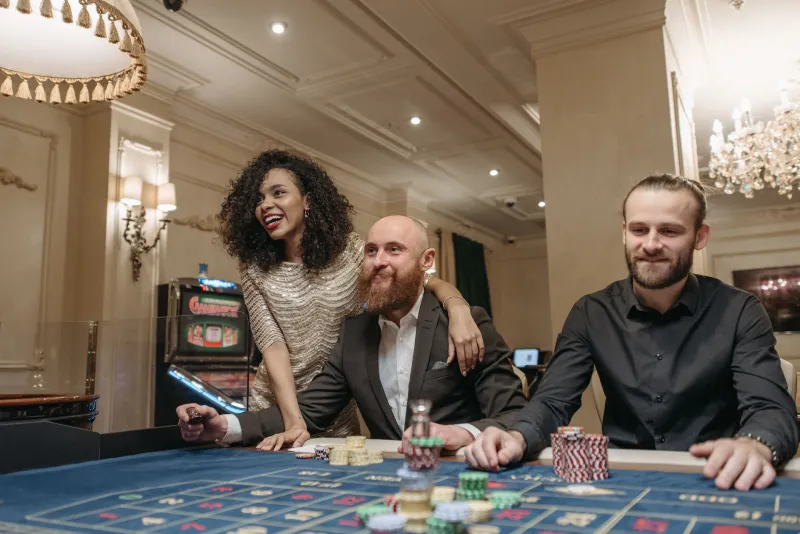
There's a particular kind of confidence that settles in after a few good spins. You're up $80, the reels are being kind, and somewhere in the back of your mind a little voice says: I've got this figured out today. It's one of the best feelings instant-play gaming can deliver — and according to behavioural psychologists, it's also the moment you're most likely to blow everything you just won.
This isn't a rare quirk. It's a pattern so consistent that researchers have given it a name: the house money effect. And for Aussie players spinning up sessions on their phones during a lunch break or winding down on a weeknight, understanding it could be the difference between walking away satisfied and staring at a zero balance wondering what just happened.
What the House Money Effect Actually Means
The term comes from a landmark study by behavioural economists Richard Thaler and Eric Johnson, who found that people treat money they've won very differently from money they started with. Winnings feel like free cash — like the casino's money, not yours — so players become far more willing to risk it.
In practical terms, this means that the Aussie player who deposits $100, gets up to $180, and then starts placing $20 bets instead of $5 bets isn't making a rational financial decision. They're making an emotional one. The $80 in profit feels expendable even though, in real terms, it's just as real as the original deposit.
Instant-play casinos accelerate this effect dramatically. The speed of online pokies, live dealer tables, and rapid-fire card games compresses what might take an hour at a physical venue into ten or fifteen minutes. You hit a few wins quickly, the dopamine kicks in, and before your brain has had time to recalibrate, you've already doubled your stakes.
Why 'Getting Ahead' Feels Like Proof You're Skilled
Here's where it gets psychologically interesting. Early wins don't just make you feel lucky — they make you feel competent. This is sometimes called outcome bias: when something goes well, we assume it's because we did something right, even when chance was entirely responsible.
For a pokie player, there's no skill component at all — every spin is independent. But after three wins in a row, the human brain starts constructing a narrative. I chose the right game. I timed my bets well. I know when to push. That narrative is fiction, but it feels completely real in the moment.
This false confidence then drives two damaging behaviours that tend to snowball together:
- Increased bet sizes — Players scale up stakes because they believe they're in a hot streak worth capitalising on.
- Extended sessions — Players stay longer because they feel they're performing well and don't want to leave the table while they're "in the zone."
Both of these dramatically increase exposure to the game's mathematical edge. And since every legitimate casino game is built with a house edge baked in, more time and bigger bets means the long-run outcome tilts further against the player — regardless of how the first twenty minutes went.
The Instant Gratification Feedback Loop
Instant-play platforms are engineered for speed, and that speed creates a uniquely potent feedback loop. Physical casinos have built-in friction — you have to handle chips, wait for dealers, move between machines. Online, those pauses disappear entirely.
When you're riding a hot streak digitally, the gap between "I'm winning" and "I should bet more" collapses to almost nothing. There's no walk back to the cashier, no moment of reflection while a dealer shuffles. You just tap the screen and the next round starts.
This frictionless environment means the house money effect plays out at warp speed. A player who might have taken twenty minutes to gradually increase their stakes at a physical venue can cycle through the same psychological progression in under five minutes online.
For Aussies who gravitate toward instant-play platforms specifically because of that speed and convenience, this is worth sitting with. The very features that make these platforms appealing are the same ones that can accelerate poor decision-making when you're feeling good about your session.
Real Numbers, Real Patterns
While individual player data from Australian online casinos isn't publicly published in granular detail, studies on gambling behaviour consistently show that session losses are disproportionately concentrated in the latter half of play — even when players entered those later stages with a positive balance.
In other words, players tend to lose the most money after they've been winning. The early wins don't protect them; they set the trap.
A 2019 analysis of online gambling behaviour in the UK (whose regulatory environment and player demographics share meaningful overlap with Australia) found that players who experienced significant wins in the first quarter of a session were statistically more likely to end that session in a net loss than players who had a flat or slightly negative start. The early positive reinforcement didn't help — it hurt.
The mechanism is exactly what we'd expect: early wins trigger the house money effect, which triggers larger bets and longer sessions, which ultimately surrenders more to the house edge than a cautious player would ever have lost.
How to Actually Protect a Winning Session
None of this means you should feel bad for enjoying a good run — that's genuinely part of what makes instant-play gaming entertaining. But there are a few practical habits that can help you hold onto more of what you win.
Set a walk-away target before you start. Decide in advance: if I hit $X in profit, I'm done. Write it down, set a phone reminder, tell a mate — whatever it takes to make that number feel real before the dopamine starts flowing.
Keep your stake size consistent. The urge to increase bets after a win is a red flag, not a green light. Keeping stakes flat means your winnings aren't immediately being recycled into higher-risk plays.
Treat winnings as real money from the first spin. Mentally earmark your profits as savings, not gameplay fuel. Some players physically transfer winnings to a separate account mid-session to make this tangible.
Take a genuine break after a win. Even five minutes away from the screen can interrupt the momentum that drives overconfident play. Step outside, make a coffee, give your brain a moment to recalibrate before continuing.
The Bottom Line
The most dangerous moment in any casino session isn't when you're losing. It's when you're winning and starting to believe that's proof of something. Instant-play platforms are brilliant at delivering that feeling quickly — but they're equally efficient at reversing it if you're not paying attention.
Getting ahead is great. Staying ahead requires understanding why your brain is working against you the moment that early profit hits your balance. Play smart, set your limits, and remember: the house edge doesn't care how good the last ten minutes felt.